8 Reasons Roatan, Honduras Is the Caribbean Destination Worth the Flight
For people who pay attention to airports, the approach into a destination tells you a lot about what you’re in for. Some approaches are purely functional: descend through cloud cover, cross twenty kilometres of suburb, touch down on a runway long enough to handle wide-body jets. Others are events in themselves. The approach into Juan Manuel Gálvez International Airport on Roatan, Honduras, falls firmly into the second category.
The island is 77 kilometres long and rarely more than five kilometres wide, and the runway runs east to west across the narrowest part of it. On the standard approach from the mainland, you come in low over the Caribbean, the reef visible through the water directly below, the jungle canopy rising on either side as you cross the threshold. The touchdown happens almost at sea level, with mangroves close enough to the runway that you could read the species names from your window seat. It is, by any measure, one of the more memorable short-field arrivals in Central America.
The island itself lives up to the approach. Here are eight reasons Roatan belongs on the travel list of anyone who appreciates both the journey and the destination.
1. Juan Manuel Gálvez International Airport Is a Study in Small Island Aviation
The airport handles a volume of traffic that would surprise most visitors who know Roatan only as a Caribbean island: regular jet service from Houston, Atlanta, Miami, and several other North American hubs, plus domestic connections from Tegucigalpa and San Pedro Sula, and seasonal charter operations from Canada and Europe. The single runway, at 2,135 metres, handles everything from regional turboprops to Boeing 737s and the occasional Airbus A320.
What makes small island airports interesting from an aviation perspective is the compressed nature of the operation. Ground handling, fuelling, customs, baggage, and passenger flow all happen within a few hundred metres of each other. The buffer time between a late inbound and a scheduled outbound is measured in minutes rather than hours. Watching the ramp operation during a busy morning push at Juan Manuel Gálvez, with several aircraft turning around simultaneously in a confined space, is a reminder of how much logistical precision underpins what passengers experience as a routine departure. Small airports that handle disproportionate traffic, like the Laramie Regional Airport covered in our piece on regional airport connectivity, develop an efficiency that their larger counterparts often lack.
2. The Mesoamerican Reef Makes Roatan One of the World’s Premier Dive Destinations
The Mesoamerican Barrier Reef, the second-largest reef system in the world after Australia’s Great Barrier Reef, runs along the Caribbean coast of Mexico, Belize, Guatemala, and Honduras. Roatan sits near the southern end of this system, and the reef that surrounds the island is in better condition than most comparable sites in the Caribbean, partly because Honduras lacks the intensive coastal development that has damaged reef systems further north.
The wall diving off Roatan’s south shore is regarded by the diving community as some of the most accessible deepwater wall diving in the Western Hemisphere. The reef drops to over 30 metres within a short swim of the shore, and the current conditions mean that drift diving along the wall face is possible for most of the year. Species diversity is high: parrotfish, grouper, eagle rays, sea turtles, moray eels, and seasonal whale shark sightings. For snorkellers who don’t dive, the shallow reef immediately offshore from several of the West End beaches provides reasonable access to the upper reef ecosystem.
3. The Island Has Distinct Communities Worth Exploring Beyond the Resorts
Roatan’s tourism infrastructure is concentrated at West End and West Bay on the island’s western tip. These areas are well-developed, comfortable, and accessible from the airport in about 45 minutes. They’re also not a fair picture of what the rest of the island is like.
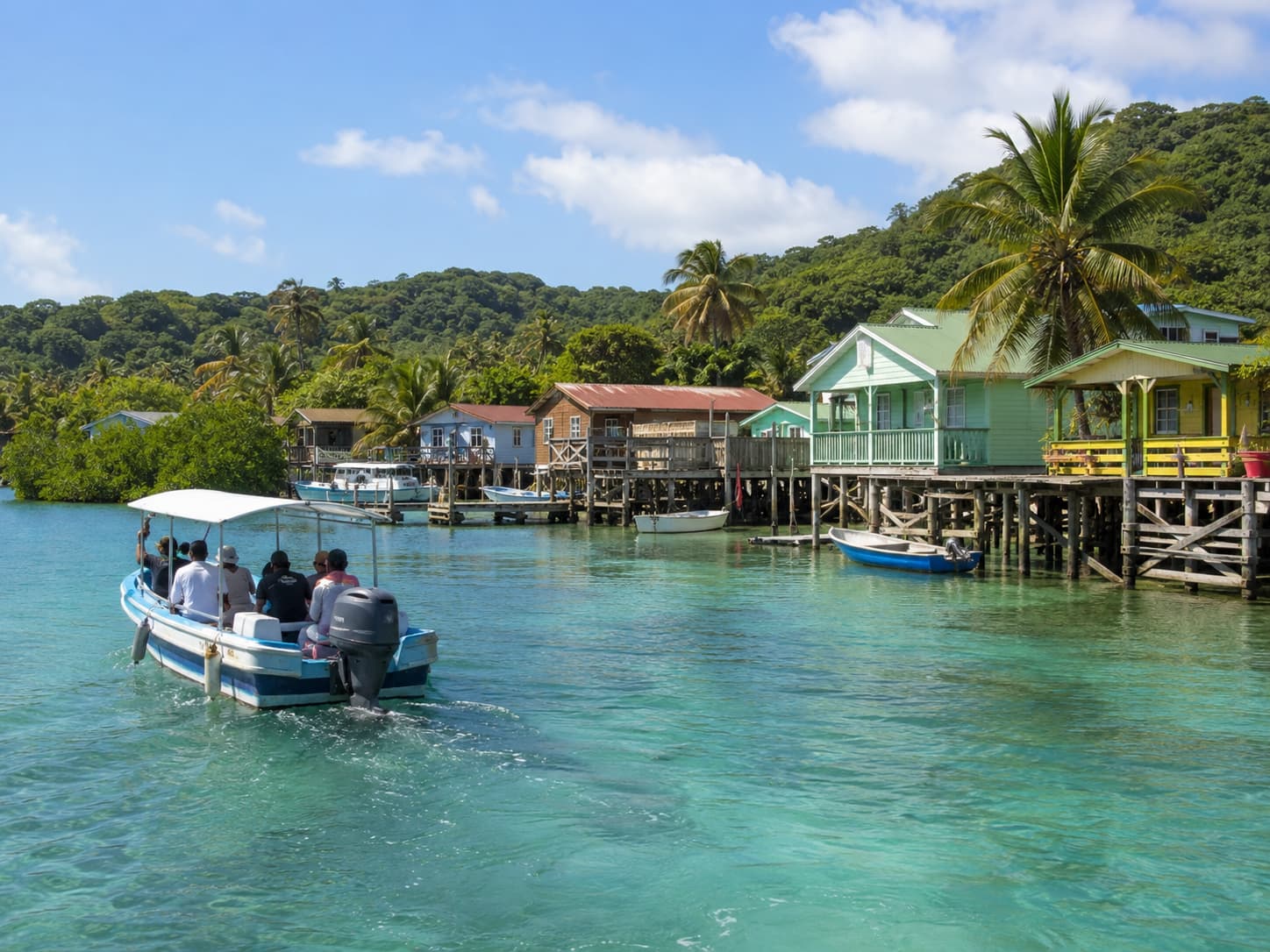
The eastern end of the island is a different world: smaller settlements like Oak Ridge, built over the water on stilts, accessible by water taxi rather than road; Punta Gorda, the oldest Garifuna community in Honduras, where the culture and music brought by the Garifuna people from the Caribbean coast of Central America in the early 19th century remains intact; and the quieter inland communities where Spanish, English Creole, and Garifuna are all spoken within a few kilometres of each other. Getting to these places requires time and some planning, but the gap between the resort strip and the actual island is worth crossing.
4. The Garifuna Culture Is One of the Caribbean’s Most Distinctive
The Garifuna people, whose ancestors were a mix of Arawak and Carib indigenous people and West African survivors of a shipwrecked slave vessel, developed a culture on the island of St. Vincent in the 17th and 18th centuries before being exiled by the British to the Bay Islands of Honduras in 1797. They carried their language, music, food, and spiritual practices with them, and those traditions have survived in recognisable form for over two centuries since.
UNESCO designated the Garifuna language, dance, and music as an Intangible Cultural Heritage of Humanity in 2001. The punta music that developed in Garifuna communities, built on a specific drum pattern and call-and-response vocal structure, is still played at community gatherings in Punta Gorda. The traditional food, centred on cassava, plantain, and seafood prepared in ways that trace directly to West African and Carib cooking traditions, is available in a handful of community restaurants that operate outside the main tourist circuit.
5. The Jungle Canopy Interior Offers a Completely Different Roatan
Most visitors to Roatan never leave the coast. The interior of the island is covered in secondary tropical forest that rises steeply from the shoreline, and several operators run canopy tours, zip lines, and hiking trails through this environment. The biodiversity of the interior is different from the reef: iguanas, several species of snake, dozens of bird species including the endemic Roatan emerald hummingbird, and the howler monkeys that have been reintroduced to the island after local extinction.
The elevation change across the island’s interior, from sea level to over 200 metres in a short horizontal distance, produces microclimates that feel nothing like the coastal heat. Walking through the canopy on a clear morning, with the Caribbean visible on both sides through breaks in the vegetation, is the kind of perspective shift on a small island that most sea-level visitors don’t realise is available.
6. Guided Tours Cover the Island’s Range Far More Efficiently Than Independent Exploration
Roatan’s road network connects the main settlements along its length, but navigation is less straightforward than it looks on a map. Some of the best sites require local knowledge: which water taxi to take to reach Oak Ridge, which community restaurants in Punta Gorda are worth seeking out, which dive sites require a specific tidal window. Without that knowledge, independent travelers tend to stay within the western resort zone and miss a significant portion of what the island offers.
Operators like Roatan Honduras Tours run structured experiences that cover the island’s key environments and communities, combining reef snorkelling, Garifuna cultural visits, jungle canopy, and island history within itineraries that use local guides who know the access points, timing, and community relationships that make the experience work. For visitors arriving on a cruise ship with a fixed number of hours on the island, or travelers on a short stay who want to cover real ground efficiently, this kind of structured approach is the difference between seeing one end of the island and understanding its full range.
7. The Approach and Departure Routing Is Worth the Window Seat
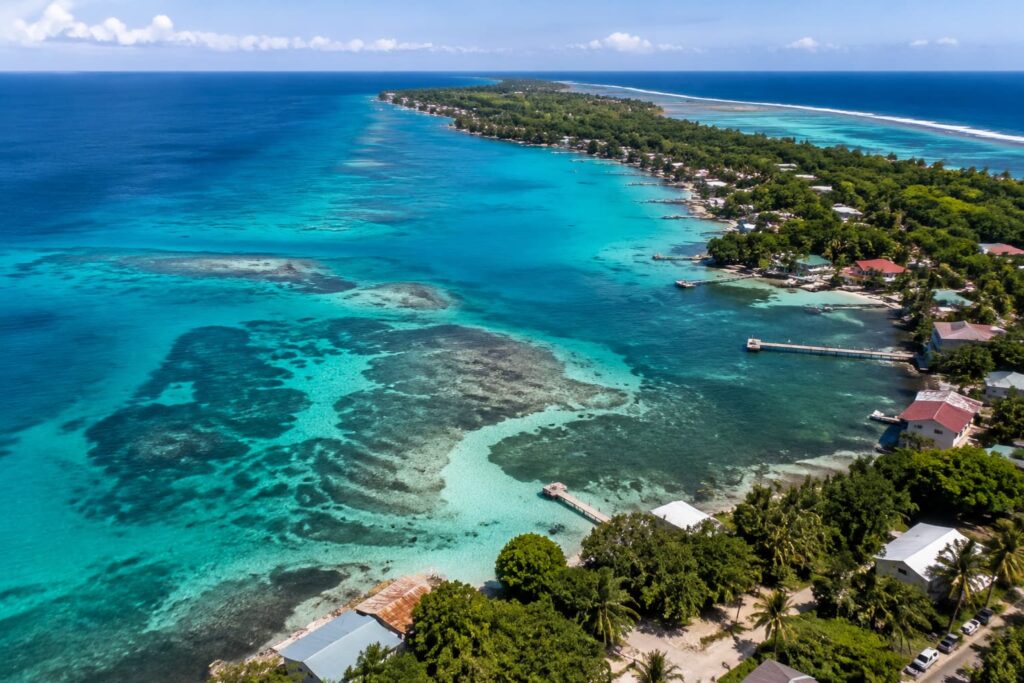
Aviation enthusiasts who pay attention to routing will find Roatan’s airspace interesting in context. The island lies at the eastern edge of Honduran airspace, with the approaches from the north and west crossing open Caribbean before the coastal transit and short-field arrival described above. Departures to the north toward the US hubs climb out over open water before picking up the oceanic tracks, offering a clear view of the reef system from altitude that is not available from any land-based viewpoint.
The specific challenge of operating jet equipment into a runway that begins and ends at sea level, on an island narrow enough that both ends of the strip are visible simultaneously from the centreline, is the kind of operational detail that pilots who fly island routes accumulate and discuss. The airport handles more complexity per square metre of ramp space than most regional airports of comparable size. As we’ve covered in our piece on smooth transit through busy international airports, operational efficiency at constrained facilities depends on exactly this kind of disciplined coordination between all parties on the ground and in the air.
8. Roatan Is Still Ahead of the Development Curve
The Caribbean has no shortage of islands that were discovered by tourism twenty or thirty years ago and have since been thoroughly processed by it. Roatan is further along that curve than it was a decade ago, but it hasn’t yet arrived at the saturation point that defines the more heavily trafficked destinations. The reef is still healthy. The eastern communities are still functioning as communities rather than tourist attractions. The prices are still reasonable by Caribbean standards. The infrastructure is sufficient without being overwhelming.
That position on the development curve is worth paying attention to for travellers who care about what they find when they arrive. The Roatan of now, accessible by direct jet service from multiple North American cities, with functioning island infrastructure and a dive and tourism sector that is well-organised without being overrun, is a different place from what it will be in fifteen years if current growth rates continue. The approach over the reef at dusk on the last flight in from Houston, with the runway lights emerging from the water below, is the kind of arrival sequence that tends to get harder to find as airports get bigger and destinations get more predictable.
A Final Thought
The best travel destinations reward the journey as well as the stay. Roatan does both. The approach over the Caribbean reef, the compact and efficient island airport, the water taxi to a stilt village on the eastern shore, the drift dive along a wall that drops into blue water below: these are the kind of sequential experiences that aviation and travel enthusiasts accumulate and return to.
The flight to Roatan from most North American hubs is under four hours. The runway will surprise you. The reef will keep you busy. The eastern end of the island will give you something to think about on the flight home.
It’s worth the window seat in both directions.